


A new presidential proclamation by Donald Trump has effectively dismantled the H-1B visa program as we know it, delivering a potentially fatal blow to an Indian IT industry heavily reliant on exporting labor over fostering innovation. The executive order introduces crippling costs and severe restrictions, targeting the foundational business model of India’s tech giants and signaling a paradigm shift in US-India tech relations.
Key Provisions of the H-1B Proclamation
The new rules are designed to make the H-1B visa economically unviable for the companies that have been its most prolific users. The core changes include:
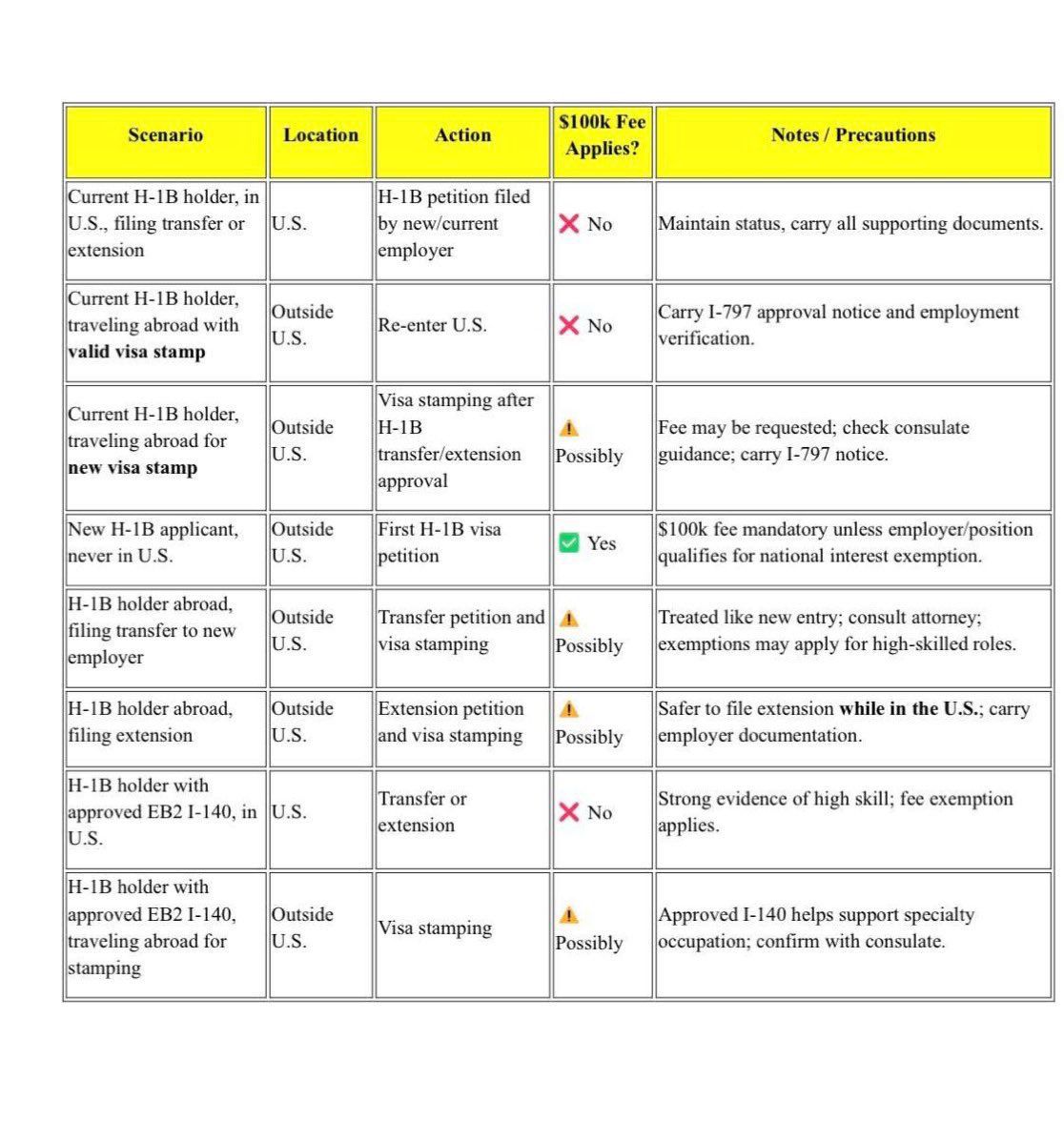
- A $100,000 Annual Fee: Companies must now pay a staggering $100,000 per year for each new H-1B employee.
- Renewal Costs: Existing H-1B holders are subject to the same $100,000 annual fee upon their visa renewal, which typically occurs after the first three-year term. This means retaining an employee for a full six-year term could cost a company $600,000 in fees alone.
- Travel Restrictions: The order warns that existing H-1B holders and their spouses should not travel outside the United States, with reports suggesting that major tech companies like Microsoft have already issued internal memos urging employees abroad to return immediately.
While the proclamation’s legal language is drafted with deliberate ambiguity to withstand court challenges, the administration’s intent is crystal clear. Commerce Secretary Howard Lutnick explicitly stated to the press that the goal is to make hiring H-1B workers financially impossible for most companies, thereby forcing them to hire American talent.
Direct Target: The Indian IT Outsourcing Model
The language of the presidential proclamation leaves no doubt about its primary target. It directly accuses IT outsourcing firms of exploiting the system, citing that they have “prominently manipulated the H-1B system, significantly harming American workers” and “outsource IT jobs to lower-paid foreign workers.”
The document also makes a pointed reference to investigations into “visa fraud” by H-1B-reliant outsourcing companies. This aligns with ongoing scrutiny of firms like Tata Consultancy Services (TCS), which is reportedly under investigation by the US Equal Employment Opportunity Commission (EEOC) for discriminatory layoff practices targeting American workers.
This move appears to have been coordinated with major American tech companies. Both President Trump and Secretary Lutnick mentioned that firms like Google, Microsoft, and Amazon were taken into confidence, suggesting that Big Tech was prepared for the shift, leaving the Indian IT sector to bear the brunt of the impact..
The Scale of the Impact
The consequences for Indian IT companies and the broader Indian economy are set to be severe.
Devastation for IT Companies
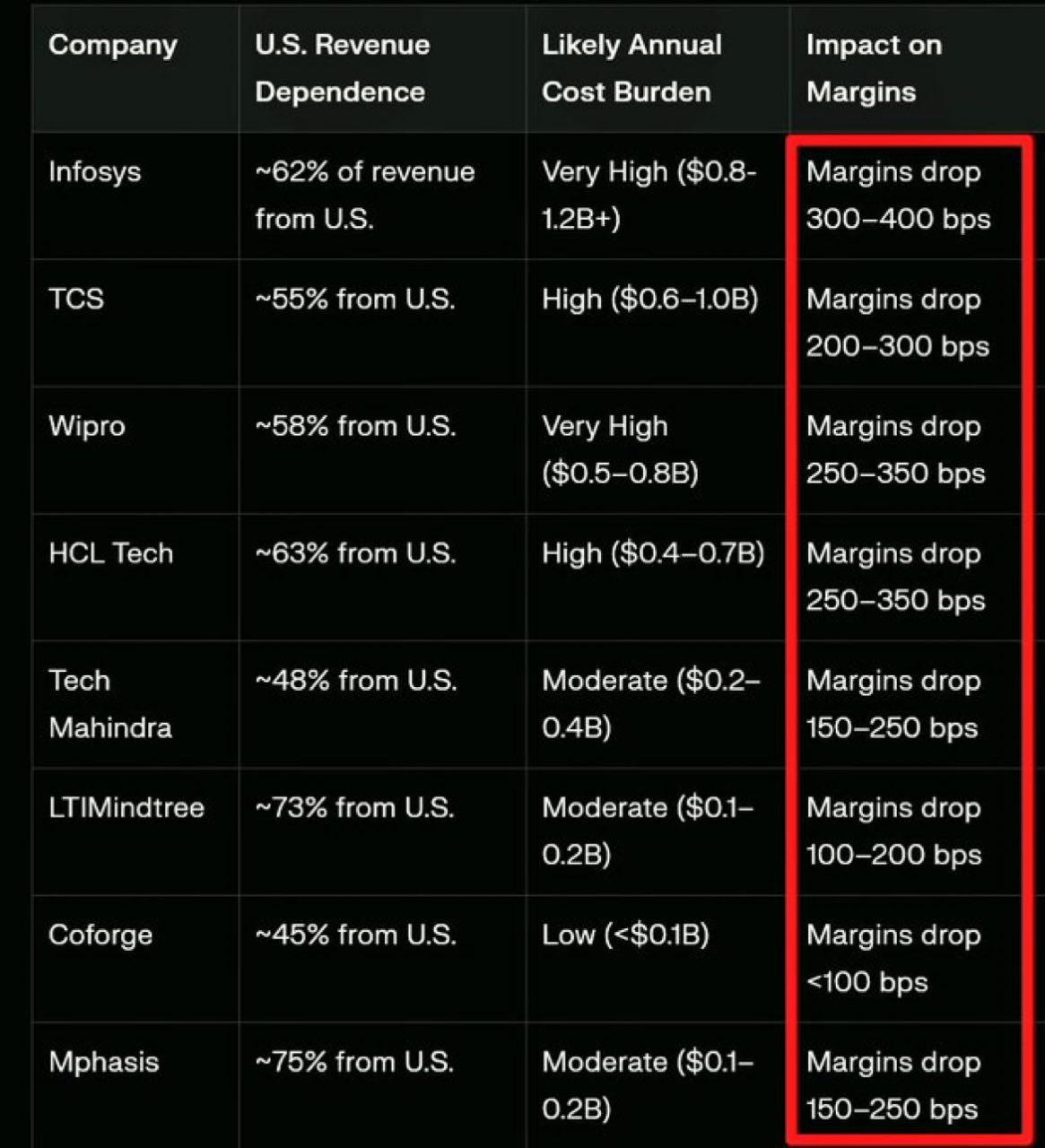
According to USCIS data, Indian nationals accounted for 71% of all approved H-1B petitions in FY2024, representing nearly 300,000 workers. The vast majority of these individuals work in the IT sector. The new fee structure renders the business model of supplying on-site tech labor—the cornerstone of companies like TCS, Infosys, and Wipro—completely obsolete. The cascading effect is expected to trigger a significant de-growth in an industry that, until now, has been a pillar of the Indian economy. The timing of Infosys’s recent stock buyback is being viewed by some analysts as an indication that corporate leadership may have anticipated this disruptive policy change.
A Blow to India’s GDP
The Indian IT industry’s direct contribution to the nation’s GDP was approximately 7% in FY2025. Its indirect contributions, through high-end consumption, job creation for support staff, and the inflow of expatriate dollars, are also substantial. A sharp decline in this sector will inevitably drag down India’s overall economic growth.
The Core Problem: A Nation Caught in a “Tech Trap”
This crisis exposes a long-standing and critical weakness in India’s economic strategy: a complete dependence on labor arbitrage at the expense of genuine innovation. For decades, India has failed to invest in research and development (R&D), a cornerstone of any modern, competitive economy.
Consider the following statistics:
- India’s R&D Investment: A stagnant 0.7% of GDP—a figure that has not changed in 40 years.
- China’s R&D Investment: 2.7% of GDP.
Given that China’s economy is roughly five times the size of India’s, this means China invests approximately 20 times more in R&D than India in absolute dollar terms each year. In essence, China accomplishes in one year what would take India two decades to achieve in terms of R&D investment.
Without a foundation of innovation, India’s growth has been precariously balanced on a single engine: domestic consumption. With job creation slowing, that engine is already sputtering. No country in history has achieved sustained prosperity solely through domestic consumption, without robust international trade competitiveness. Even ancient civilizations like the Harappan relied on trade to flourish.
By prioritizing labor over innovation for decades, India has walked into a “tech trap.” The H-1B crisis is not the cause of the problem but a symptom of this deeper, self-inflicted vulnerability. Without a radical and immediate shift towards investing in R&D and fostering a culture of innovation, India risks condemning itself to permanent economic mediocrity. Investors should exercise extreme caution.