


Introduction: The Hidden Geometry in Stock Markets
Financial markets often appear chaotic, but beneath the surface, they follow structured mathematical principles. One such powerful tool is Pythagoras’ Theorem, which traders can use to analyze time cycles, price movements, and market trends. This article will break down how the 90-degree relationship between price and time can help predict big moves in Nifty.
Understanding Pythagoras’ Theorem in Trading
Pythagoras’ Theorem states that in a right-angled triangle:
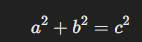
Where:
- a = Time Factor (Number of Trading Days/Candles)
- b = Price Movement (Price Range from High to Low or Low to High)
- c = Cycle Completion (Measured Move in Market Behavior)
By applying this theorem, traders can measure price movements relative to time and detect key turning points where markets align with geometric harmony.
Gann’s Use of Pythagorean Theorem in Market Timing
W.D. Gann, one of the most renowned market forecasters, often spoke about the relationship between time and price. He believed that when time and price squared, a trend change was imminent.
Key Principles from Gann’s Work That Relate to Pythagoras’ Theorem:
- Time & Price should be in balance for a major reversal.
- Square numbers (e.g., 49, 64, 81) mark potential turning points.
- Angles like 45°, 60°, and 90° indicate critical market movements.
- Geometrical ratios, like the Pythagorean Triangle (3:4:5), align with market movements.
How to Use Pythagorean Calculations in Nifty Trading
Step 1: Identify a Significant Swing High or Low
Start by marking a major high or low in Nifty’s price history. This is your reference point.
Step 2: Measure Price & Time Movements
- Count the number of trading days (time movement) from the swing point.
- Calculate the price movement (high to low or low to high).
Step 3: Apply the Pythagorean Formula
If you have two known values (price & time), solve for the third to estimate where the next trend change might occur.
c=a2+b2c = \sqrt{a^2 + b^2}
This helps determine whether the market is in harmony or imbalance, indicating potential reversals.
Historical Examples: Pythagorean Theorem in Action
Case Study 1: Nifty’s Major Reversal in 2020
- Swing Low: March 2020 (COVID-19 Crash) at 7,511
- Swing High: January 2021 at 14,753
- Price Move (b): 7,242 points
- Time Move (a): 210 trading days
Applying the Pythagorean formula, the expected cycle move aligns with key market reversals. The actual trend change occurred near a mathematically significant price-time balance, confirming the theorem’s effectiveness.
Case Study 2: Bank Nifty Correction in 2023
- Swing High: December 2022 at 44,150
- Swing Low: March 2023 at 38,620
- Price Move (b): 5,530 points
- Time Move (a): 63 trading days
Using Pythagorean ratios, traders could forecast a potential bounce near the 3:4:5 geometric proportion. The actual reversal happened around 38,500, proving the concept’s reliability.
Using Pythagorean Ratios to Predict Future Nifty Trends
Important Geometric Ratios to Watch:
- 3:4:5 Ratio – Most stable pattern, predicting strong reversals.
- 5:12:13 Ratio – Seen in extended trends before a pullback.
- 7:24:25 Ratio – Indicates parabolic moves leading to sharp corrections.
By mapping these ratios to time cycles and price structures, traders can anticipate when a market is stretched beyond equilibrium and prepare for trend changes.
How to Apply This in Your Trading Strategy
✅ 1. Backtest Historical Data
Before using this method, analyze past trends in Nifty & Bank Nifty to see how often price & time squared before major reversals.
✅ 2. Combine with Other Tools
- Gann’s Square of 9 for price levels
- Fibonacci Time Zones for confirming cycles
- Planetary Cycles (Astro Trading) for extra confirmation
✅ 3. Look for Confluence with Support & Resistance
When Pythagorean projections align with key support/resistance zones, it strengthens trade conviction.
Conclusion: The Power of Mathematics in Trading
Using Pythagoras’ Theorem, traders can predict when price and time align to create powerful market movements. By integrating geometric ratios, cycle analysis, and historical data, you can time your trades more effectively and improve accuracy in capturing big moves in Nifty.
Want to Learn More About Market Timing & Financial Astrology?
W.D. Gann Trading Strategies – Master Gann’s methods for precise market forecasting.
Financial Astrology Mentorship Program – Learn how planetary cycles impact financial markets.
Trading Using Market Timing Strategies – Apply time cycles for better trade execution.
Yes sir, very much interested. price please